

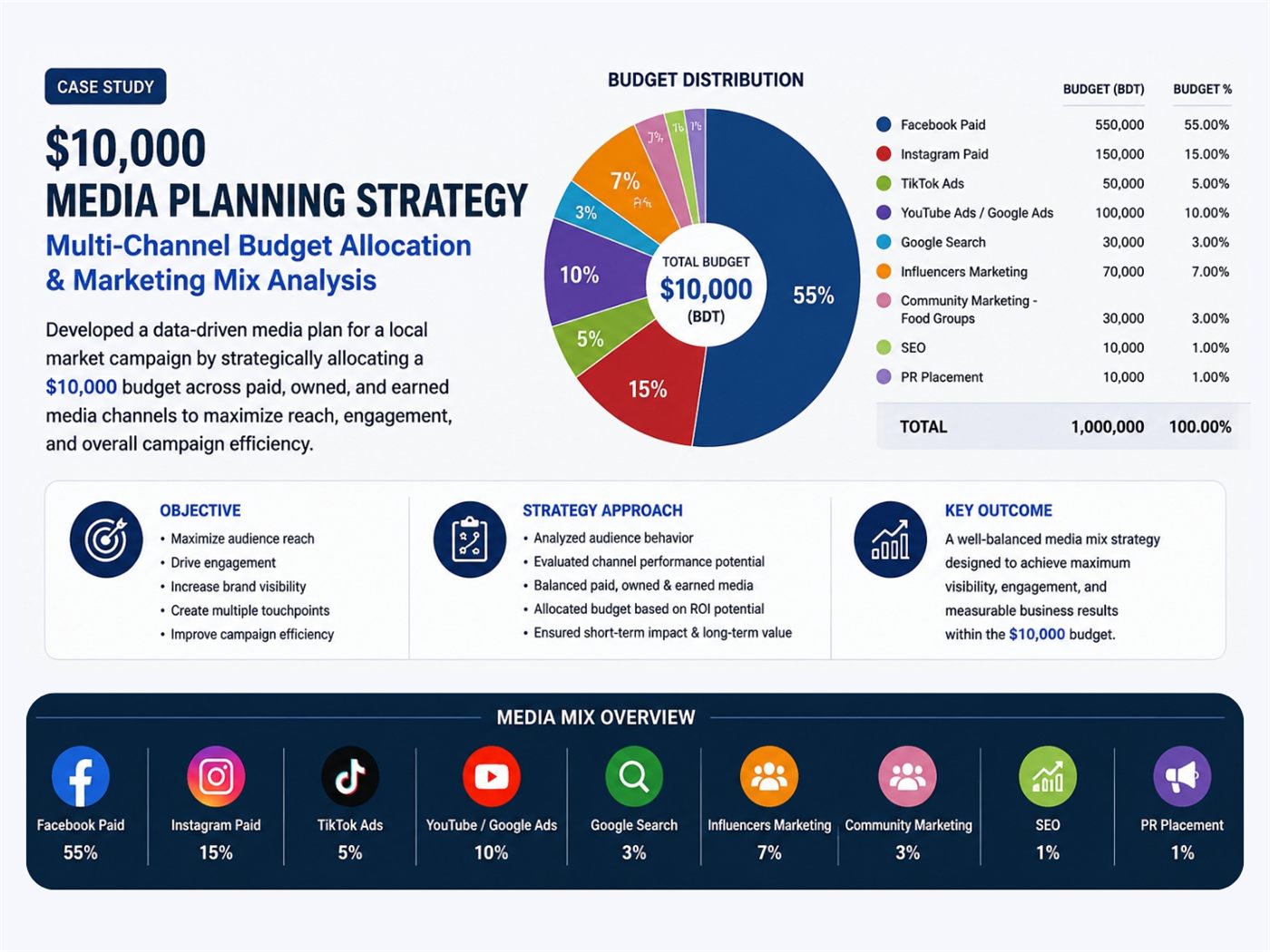
A local market campaign, roughly $10,000 to allocate. The obvious move, and the one I see most often, is to divide it across platforms in something close to equal parts. It feels balanced. It performs badly.
The actual question isn't "which platforms should we be on?" It's "where is this specific audience concentrated, and what job can each channel realistically do?"
Three categories, not nine platforms
Before allocating a dollar, I grouped everything into three categories with different purposes.
Paid media, scalable reach and direct targeting
Facebook Ads, Instagram Ads, TikTok Ads, YouTube Ads, Google Ads. This is where you buy attention at a predictable rate and can turn the volume up or down.
Owned media, leveraging what already exists
Facebook page content and organic brand communication. Costs almost nothing incremental, and it's the thing people check after an ad makes them curious.
Earned media, trust, visibility and community
Influencer marketing, community marketing, SEO and PR placement. Slower, harder to forecast, and the only category that keeps working after you stop paying.
The actual allocation
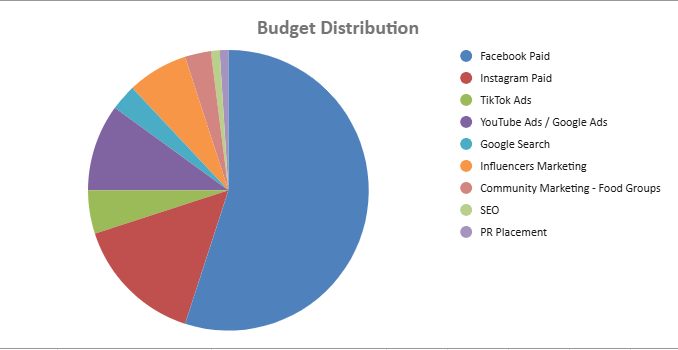
- Facebook Paid, 55%
- Instagram Paid, 15%
- YouTube & Google Ads, 10%
- Influencer marketing, 7%
- TikTok Ads, 5%
- Google Search, 3%
- Community marketing, 3%
- SEO, 1%
- PR placement, 1%
Why 55% went to one platform
Because that's where this audience actually was. Not because Facebook is universally best, for a B2B SaaS product this split would be indefensible.
The uncomfortable truth about media planning is that concentration usually beats diversification at small budgets. Spread $10,000 across nine channels evenly and you get roughly $1,100 each: not enough for any platform's algorithm to exit the learning phase, not enough creative testing to find what works, and nine sets of results too thin to draw conclusions from.
Put 70% into two platforms and you get statistically meaningful data on both, plus enough spend for optimisation to actually function.
Why SEO got 1%
This one surprises people, and it deserves an explanation, because I spend most of my time on SEO.
This was a defined campaign with a campaign timeline. SEO does not deliver inside a campaign window, it compounds over quarters. Funding it properly from a campaign budget would have starved the channels that could actually deliver within the period, while underfunding SEO relative to what it needs to work.
SEO belongs in an operating budget, not a campaign budget. The 1% here maintains groundwork; it isn't a strategy. If this were an annual growth plan rather than a campaign, that number would look completely different.
What this framework is actually for
Effective media planning requires understanding five things:
- Audience behaviour, where they genuinely spend attention
- Platform strengths, what each channel is structurally good at
- Customer journey stages, awareness needs different channels than conversion
- Budget efficiency, minimum viable spend per platform before results mean anything
- Campaign objectives, reach, leads and brand-building are not the same goal
The final mix balanced short-term reach against long-term brand-building. The majority went into scalable acquisition; a deliberate minority protected visibility and credibility that would outlast the campaign.
Not every platform deserves the same investment. The most common budgeting mistake is treating fairness between channels as if it were strategy.
If you're allocating a budget right now
Two questions worth answering honestly before you split anything:
- What's the minimum spend for this platform to produce readable data? If your allocation is below it, that channel is a donation, not a test.
- Is this a campaign or an operating plan? Compounding channels like SEO and community belong in the second. Putting them in the first sets them up to fail and then get blamed.