

Most local businesses set their profile up once and never touch it again. That was survivable when Google treated the profile as a directory entry. It isn't now, Google rewards activity, relevance and consistency, and a dormant profile reads as a business it has no current reason to trust.
Work through these in order. Step 2 depends on step 1, and step 4 is the one almost everybody skips.
Step 1, Audit what's actually there
Before changing anything, write down the current state so you can measure against it. In the Performance tab, record your last 6 months of:
- Calls
- Business profile interactions
- Website clicks
- Direction requests
Then look critically at the profile itself. The problems I find most often: generic optimisation copied from a template, a weak service structure, no relevance beyond the immediate suburb, inconsistent or abandoned posting, poor imagery, and minimal topical depth.
Also search your main service plus each nearby area name and note where you appear. That geographic picture is your real baseline.
Step 2, Rebuild categories and services
Your primary category is the single highest-leverage field on the profile. Choose the most specific one that accurately describes your main business, specificity beats breadth. Then add secondary categories for genuine additional services only.
Now the part most businesses get wrong. Under Services, don't list one thing.
A HVAC business typically lists "AC Repair" and stops. Instead build out every distinct service as its own entry, AC repair, AC maintenance, AC cleaning, emergency AC repair, AC installation. Each one gets its own description written around customer problem intent: what the customer is experiencing when they search for it.
Write naturally. "We repair air conditioning units that have stopped cooling, including same-day emergency callouts" is worth more than a keyword string. Google parses natural language now; keyword stuffing signals a profile trying to game a system that stopped rewarding that.
Step 3, Expand into nearby service areas
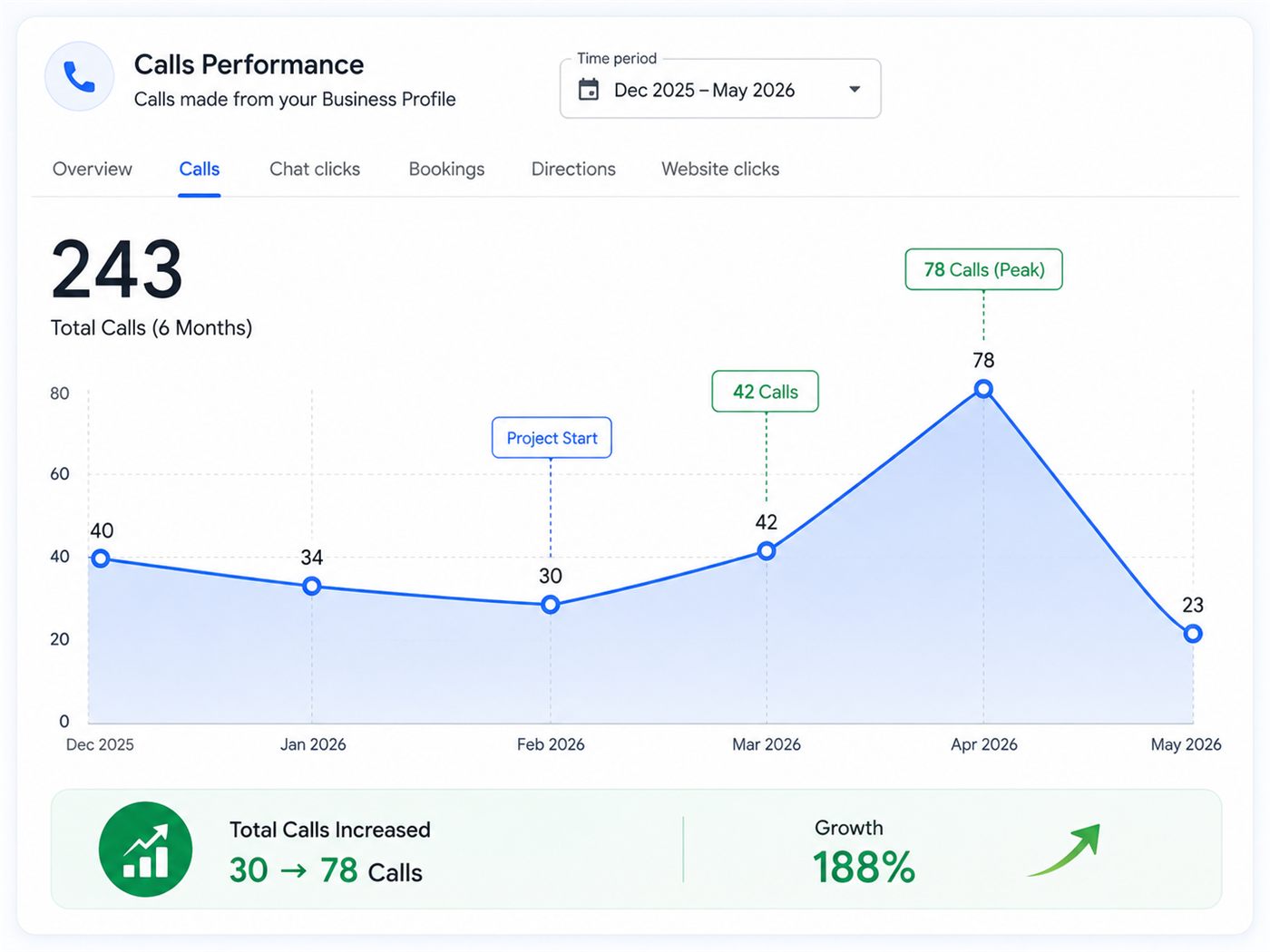
This was the biggest single lever on the HVAC project.
The instinct is to target your city. That's too narrow, and it leaves you invisible in exactly the adjacent areas where demand often is. List every area you can genuinely serve profitably, including neighbouring districts and residential communities.
Two rules. First, only list areas you'd actually travel to; a lead you can't service profitably is worse than no lead. Second, back the claim up, mention those areas in service descriptions and posts, and use photos taken there. Listing a service area with no supporting signals is a claim without evidence.
Step 4, Visual optimisation
The most underrated step, and the one nearly everyone skips.
Google increasingly uses visual signals to validate that a local business is genuinely active and authentic. Here's what to do:
- Upload real service photos, your team, your vehicles, actual jobs. Not stock imagery of generic equipment.
- Make them geo-relevant. Photos taken in the areas you're targeting, with recognisable context where possible.
- Name files descriptively before upload,
ac-repair-business-bay-technician.jpgnotIMG_4471.jpg. - Keep adding them. A profile receiving new photos monthly reads as an operating business. One that received twelve photos in 2023 does not.
Step 5, Build an educational posting strategy
Look at what your competitors post. It's almost always generic promotions, discount graphics and "Best [service] in [city]" spam.
Post the opposite:
- Educational content, how something works, what a fair price looks like
- Maintenance awareness, what customers should be doing themselves
- Seasonal issues, the problems that spike at this time of year
- Area-focused updates, work completed in specific neighbourhoods
- Problem-solving posts, answering the question behind the search
Aim for weekly. Consistency matters more than volume; this is a compounding input, not a switch you flip.
Step 6, Measure the right things
Give it 60 days minimum before judging. Then compare against the baseline from step 1.
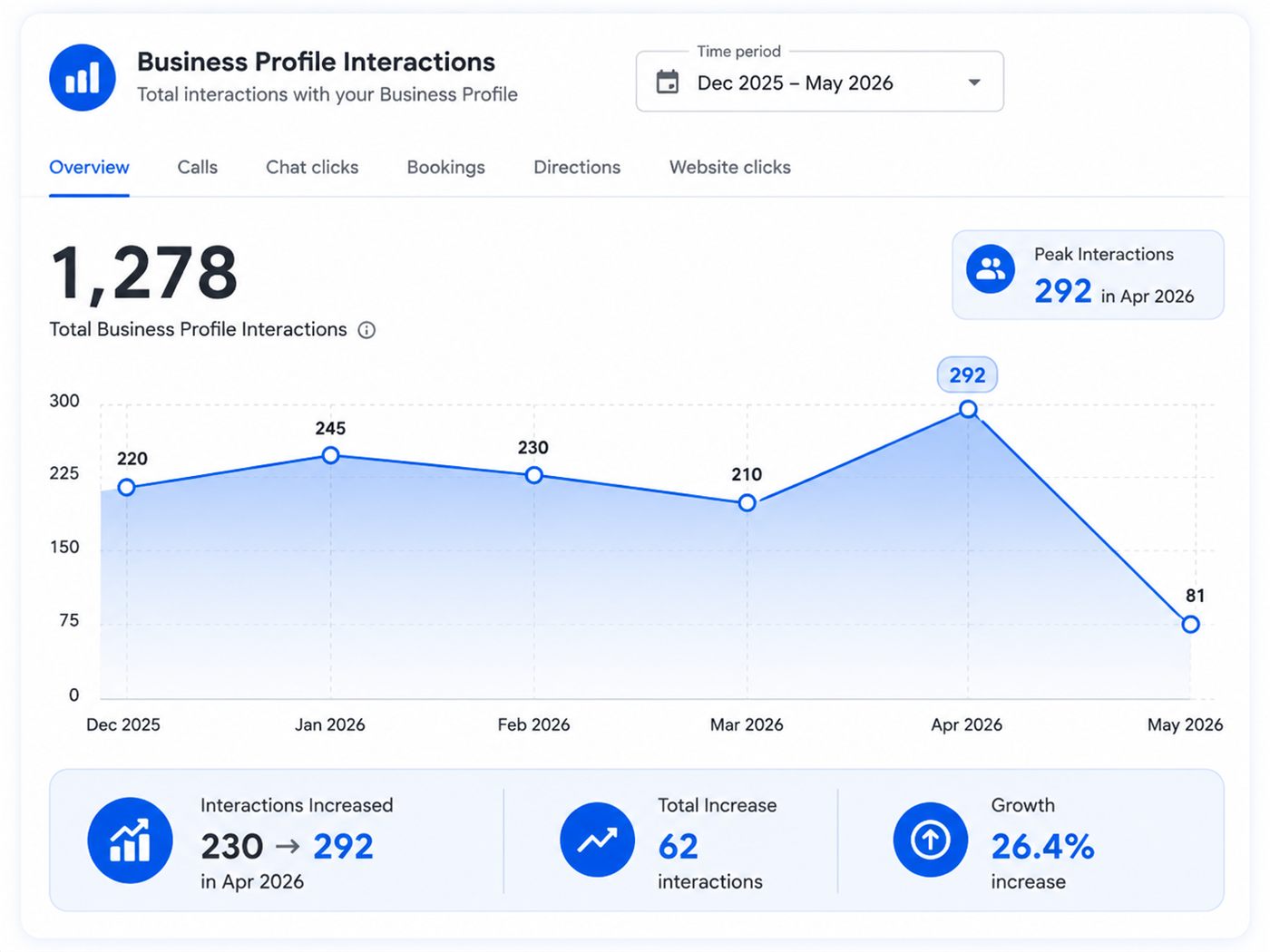
The obvious metric is calls. The more informative one is geographic spread, repeat the area searches from step 1 and see where you now appear. On the HVAC project the call increase was the headline, but the business appearing consistently across nearby service areas was what actually changed lead quality.
One honest caveat
Local demand is seasonal in most service industries. If your calls jump and then dip, check whether that's your profile or your market before changing anything. Structural gains, service depth, area coverage, visual authenticity, hold steady. Monthly peaks move with demand.
Anyone showing you a local SEO graph that only goes up is showing you a selected window.